
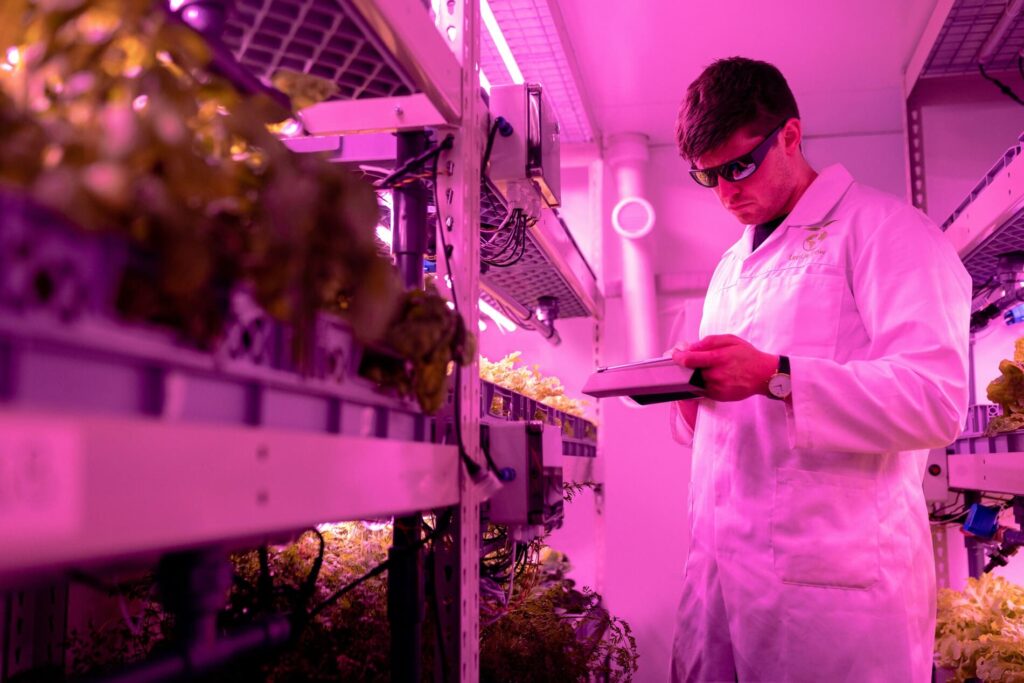
Smart farming: doing more with the same or fewer resources
Technological progress has a significant impact on various areas of human activity, including the agricultural sector.
Smart agriculture seeks to reconcile agricultural management with data technologies, with the aim of optimizing the complex systems and volatile dynamics of agriculture. Basically, it consists of bringing big data to the agricultural field, increasing the visibility of farmers in the planting, cultivation and harvesting processes.
Agriculture, by its nature, is an information-dependent activity. However, farmers who rely on traditional techniques and resources obtain only part of the information, and often with inaccuracies. This includes crucial aspects such as soil quality, climate and weather conditions, as well as factors such as crop irrigation and pest control, among others.
The aim of the new agrotechnologies is therefore to fill this gap, generating accurate information capable of influencing all agricultural results. It is data, measurements and knowledge that help to choose the best fertilizers, crop rotation strategies and many other aspects of field management.
It not only improves productivity, but also contributes to the sustainability and continued development of the agricultural sector.
How smart agriculture works
Smart agriculture is based on the application of advanced technologies to improve efficiency, productivity and sustainability in agricultural production.
Sensors and IoT Devices
Agricultural technology has advanced significantly with the implementation of sensors in the field, which play a crucial role in real-time data collection. These devices are designed to monitor essential variables such as soil moisture and temperature, as well as other environmental factors that directly impact agriculture.
The main purpose of this innovation is to provide detailed and specific information, focused on specific points in the field. This information is vital for making informed decisions regarding irrigation and other aspects of agricultural management, thus enabling more efficient and effective management of resources and improving the productivity and sustainability of farming practices.
Satellite Images and Drones
This innovative agricultural technology works through the use of high-resolution satellite imagery and drones equipped with advanced cameras. These tools provide valuable information on the current state of crops, plant health, and the spatial distribution of agricultural plots.
The objective of this technology is to facilitate the comprehensive monitoring and evaluation of large areas of crops, which is essential for modern agricultural management. With this data, farmers and land managers can make more accurate and effective decisions, thus optimizing crop yields, improving management practices and contributing to a more sustainable and productive agriculture.
Data Analysis and Machine Learning
This advanced technology in the agricultural sector is based on the use of machine learning algorithms to analyze extensive agricultural data sets. Its operation involves detailed image interpretation, yield prediction and identification of patterns and trends in crop behavior.
The main objective of this technological innovation is to provide comprehensive reports and analysis to help optimize various aspects of agricultural management. This includes everything from the selection of the most suitable crops for a specific area to the precise and efficient application of inputs such as fertilizers and pesticides. In this way, machine learning algorithms become a key tool for improving efficiency, productivity and sustainability in modern agriculture.
Automation of Agricultural Machinery
The implementation of autonomous farm machinery represents a significant leap in agricultural efficiency and management. This technology, designed to perform specific tasks such as planting, cultivation and harvesting without the need for human intervention, has as its main purpose to improve operational efficiency on farms.
Reducing reliance on manual labor not only allows for more accurate and timely management of farming activities, but also optimizes resources and boosts productivity. This innovation is a clear example of how automation can transform and modernize agricultural practices, making them more sustainable and efficient.
Geographic Information Systems (GIS)
The use of Geographic Information Systems(GIS) technologies in agriculture marks an important advance in the way geospatial data is handled and analyzed. This technology makes it possible to map and analyze information related to critical aspects such as topography, soil quality and other environmental factors that directly affect agriculture.
Its purpose is to provide a powerful tool for crop planning and efficient management of agricultural plots. In addition, it facilitates location-based decision making, allowing detailed segmentation of plots based on their productivity and heterogeneity. This innovation not only improves precision in agriculture, but also contributes to a more efficient use of resources and more sustainable management of agricultural land.
Digital Agriculture Platforms
Centralization of agricultural data management is a crucial technological advance in the agricultural sector. This methodology consists of integrating information from various sources, such as sensors in the field, satellite images and manual records, into a single platform.
The purpose of this data integration is to facilitate decision-making, optimize agricultural planning and foster collaboration between the various stakeholders in the sector. With a holistic and unified view of data, farmers, managers and other professionals can make more accurate analyses, respond more effectively to the challenges of the sector and work together towards a more efficient and sustainable agriculture.
Resource Management and Energy Efficiency
The use of data to optimize the use of resources in agriculture, such as water and fertilizers, is a key strategy for improving efficiency and sustainability in the sector. This technology works by collecting and analyzing data to reduce waste and improve energy efficiency in agricultural practices.
The purpose of this approach is twofold: on the one hand, it seeks to achieve more sustainable production, minimizing the environmental impact of agriculture through a more rational use of natural resources; on the other hand, it aims to make agriculture more economical, reducing costs associated with excessive consumption of inputs such as water and fertilizers. This approach represents an important step towards a more environmentally conscious and respectful agriculture, while maintaining economic viability for farmers.
Overall, smart agriculture seeks to create a more efficient and sustainable system by leveraging emerging technologies to improve each phase of the agricultural cycle. The integration of these components allows farmers to make more informed decisions and improve the overall management of their operations.
Advantages of smart agriculture
The technical progress that the agricultural sector has been experiencing in recent years can drastically change the way of working, both for small farms and large companies.
The introduction of modern agricultural technology is occurring at such a rapid pace that it is now available not only in developed regions, but also in developing ones.
Just as digital technology facilitates numerous tasks in the office, it can significantly improve work in the field. Overall, smart farming offers farmers a number of advantages:
- Process Optimization: Enables more efficient management of agricultural operations, from planting to harvesting, through the use of accurate data and detailed analysis.
- Improved Decision Making: Provides real-time information on weather conditions, soil quality and crop status, which helps farmers make informed and timely decisions.
- Cost Reduction: By using technologies such as automation and precise input control, operating costs can be reduced and efficiency in the use of resources such as water and fertilizer can be increased.
- Environmental Sustainability: Facilitates more sustainable farming practices by minimizing resource waste and reducing environmental impact.
- Increased Productivity: The implementation of advanced technologies can increase crop productivity and yields, which translates into higher incomes for farmers.
- Access to Global Markets: By complying with quality and safety standards, agricultural products produced with smart technologies are more likely to access international markets, expanding sales opportunities.
In addition, smart farming has other indirect benefits to society, such as reducing the need for labor, minimizing stress on machine drivers, streamlining task recording and reporting, among others….
Satellite technology in the agricultural sector
The information generated by satellite technology has revolutionized the way in which users can gain an in-depth understanding of the state of their fields. The data received is processed and interpreted to provide users with a detailed view of their land. This advancement has marked a significant departure from traditional methods, which required an extensive staff of scouts to survey and scour vast areas of land.
Satellite data analysis has effectively replaced these practices, allowing a data manager to study vegetation indices and other indicators for multiple fields simultaneously, spending considerably less time on this task.
With the help of smart farming methods, agricultural companies can cover larger areas, save time in processing information, reduce the costs of using drones and monitor the territory 24 hours a day.
Satellite monitoring is a very useful tool for large farmer cooperatives that have to monitor the status of large areas. This technology provides the ability to move from a single field to cover vast regions. The global layering feature facilitates monitoring of vegetation at all sites in the same region.
Intelligent agriculture solutions
The application of satellite technology in agriculture has led to innovative solutions that optimize agricultural processes and improve decision making. Some satellite-based smart farming solutions include:
- Continuous monitoring: The ability to continuously monitor large tracts of land, providing up-to-date data on crop status, weather conditions and other relevant parameters.
- Vegetation Mapping: Using high-resolution satellite imagery, vegetation maps are generated that allow farmers to assess crop health, identify problem areas and take preventive measures.
- Multispectral Analysis: Satellite technology captures data in different light spectrums, enabling multispectral analysis to assess plant health, identify nutritional deficiencies and anticipate problems before they significantly affect crops.
- Efficient Resource Management: Satellite monitoring helps optimize the use of resources such as water and fertilizers, allowing for more efficient and sustainable management of agricultural inputs.
- Crop Planning: Satellite data facilitates strategic crop planning by providing information on soil conditions, moisture, and other factors that influence crop choice and crop rotation.
- Early Warnings: The ability to detect changes in crops through satellite analysis allows the generation of early warnings about possible diseases, pests or adverse conditions, enabling a quick and effective response.
- Scalability: Solutions based on satellite technology are highly scalable, allowing their application in small farms as well as in large cooperatives, covering large areas efficiently.
The combination of these solutions not only improves operational efficiency, but also contributes to a more sustainable and resilient agriculture, helping farmers make informed decisions to maximize crop yields.
Data Mapping
A distinctive feature of smart farming lies in the use of accurate field data, allowing visualization so that farmers can quickly assess what has been done and plan further action. When dealing with many fields and huge amounts of information, it is important that all measurements are presented in a convenient and easy-to-read form, in a unified format, and are easy to process and analyze.
In this context, farmers can upload all necessary data, such as the type and amount of fertilizer applied, spraying, harvesting and other relevant information, into a Data Manager.
This information can be displayed in the form of maps, whose display parameters can be adjusted according to the configuration of the on-board computer of the vehicle used, whether it is a tractor or a car. In any case, these maps are an effective tool for farmers to help them quickly assess the efficiency and quality of the work performed.