
Asbestos-containing fiber cement pipe
In Spain, asbestos cement pipes with asbestos were widely used during the 20th century for their strength and durability.
However, due to the health risks associated with asbestos, its use was banned in 2001 with Royal Decree 396/2006, which also established protocols for its removal and handling. Since then, there have been efforts to remove and replace these pipes throughout the country.
Approximately 40 thousand kilometers of asbestos cement pipes exist in Spain, data from 2016. This means that 1 out of every 5 supply pipes are made of asbestos cement.
What are fiber cement pipes?
Fiber cement pipes are a common type of conduit used in potable water and drainage systems in older buildings. They are composed mainly of cement, reinforcing fibers such as asbestos, silica and water.
These pipes were popular in the past due to their durability and wear resistance, but their use has declined due to health concerns related to asbestos, which has been classified as a carcinogen by the International Agency for Research on Cancer (IARC).
As a result, fiber cement pipes are now being phased out and replaced by safer materials such as PVC (polyvinyl chloride) and PE (polyethylene) in many parts of the world.
Asbestos-cement pipes with asbestos how it affects health
Asbestos cement pipes containing asbestos can pose a serious risk to human health.
The danger of asbestos lies in the microscopic fibers that can be released when the material is damaged or decomposes over time. These fibers are small enough to be inhaled and become trapped in the lungs, which can cause a variety of serious diseases, such as asbestosis or lung cancer.
These health problems do not develop immediately after exposure to asbestos, but may take decades to appear. For this reason, it is essential to avoid exposure to asbestos whenever possible.
Asbestos detection in asbestos cement pipes
To know if a fiber cement pipe contains asbestos, three methods can be used for its correct detection:
Checking the installation date
First, it is essential to identify when the fiber cement pipes were laid. If they date from before 2002, they could contain this material.
If you want to know more about how to recognize asbestos, we leave you this article that clarifies it perfectly.
Inspection of pipelines
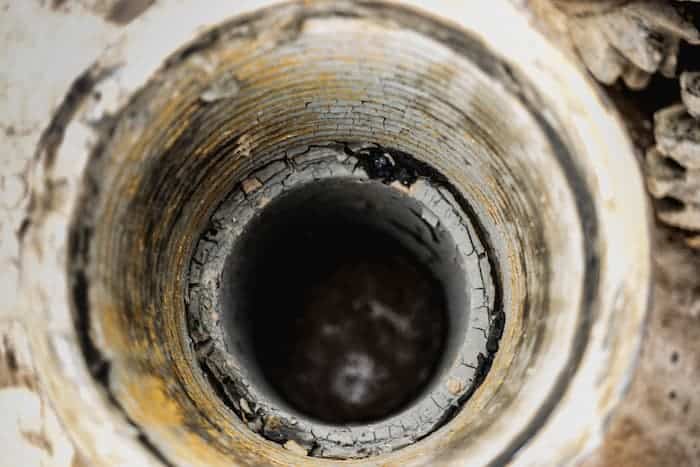
Given its age, it is possible that it may present cracks or damage, which could contaminate the circulating water. It is believed that, after 40 years, the thickness of the pipe could decrease by up to 8 millimeters.
For this reason, it is crucial to check for the presence of gray or white debris on the pipe surface. They could also be found on the pipe connections or assemblies.
Usually if a census of asbestos is made on the buildings and gives us clues about the materials used in that area and in some buildings in particular, which probably use the same materials for asbestos cement pipes.
Material evaluation
It is necessary to take a sample following occupational safety standards and send it to a certified laboratory.
Regulations for asbestos-containing asbestos cement pipes
Asbestos-containing fiber cement, formerly popular in pipes because of its strength, has been recognized as a health hazard due to its carcinogenic potential.
Many countries have implemented strict regulations, prohibiting their use, production and sale. When removing or replacing these pipes, it is vital to do so with procedures that prevent the release of fibers.
This includes wetting the pipes to limit dust and disposing of them in specialized locations. Existing pipelines should be inspected and maintained regularly to prevent deterioration.
The priority is to ensure safety and regulatory compliance, protecting public health from the hazards associated with asbestos in asbestos cement.
How to cut fiber cement pipe with asbestos
Cutting asbestos cement pipe with asbestos requires protective equipment, including masks and appropriate clothing. The pipe should be wetted to minimize dust.
The use of manual tools, avoiding electric tools, reduces the release of fibers. Cutting should be slow, with the area constantly moistened. Subsequent cleaning and waste disposal should follow specific regulations to handle asbestos safely.
Decontamination of equipment and clothing is essential. The intervention of trained professionals is recommended to ensure safety during the process, thus protecting the health of all involved.
In summary, asbestos cement pipe has been a common choice in the past due to its durability and fire resistance. However, as we have learned more about the health risks associated with asbestos, it is clear that this option is no longer safe or recommended. Exposure to asbestos can have serious health consequences, such as lung disease and cancer, making it imperative to avoid its use and consider replacing asbestos cement pipes with safer alternatives.
If you have asbestos cement pipes in your home or workplace, it is essential to take steps to remove and replace them with safer materials. People’s safety and health should always be at the forefront, and asbestos removal is an essential part of that process. Consult with asbestos removal professionals and be sure to follow regulations and recommended practices to ensure a safe and healthy environment for everyone.