Agforest

Public administration

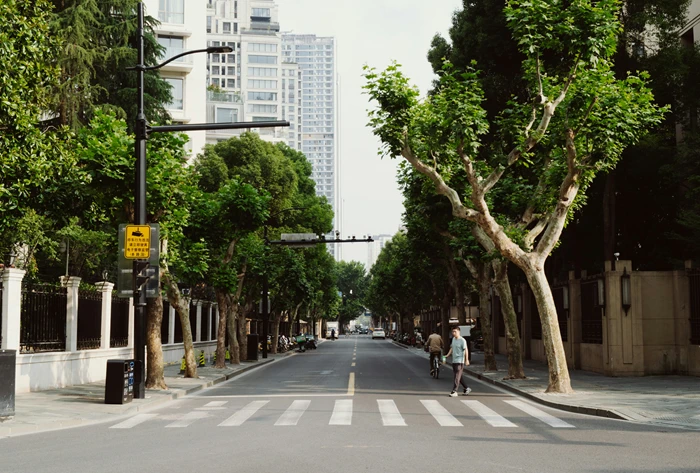
Monitoring of green areas and urban trees

Status of urban trees

Reducción de la temperatura que el arbolado urbano puede generar en verano. +12 ºC Coste medio por habitante del mantenimiento del arbolado urbano en España. 45 € Arbolado que causa incidencias sin problemas visibles debido al cambio climático. 80 % Muertes registradas en Madrid en los últimos años por problemas en el arbolado viario. 5

Optimizing the maintenance of green areas

At Agforest, we turn satellite imagery and artificial intelligence (AI) into allies for public administrations and green space maintenance companies to optimize costs and minimize risks.

  • Inventory

    Inventory

    Inventory update

    Through semantic segmentation and LiDAR data integration, we automatically identify and characterize urban trees, estimating crown diameter and height to facilitate the updating of the municipal inventory.

  • Prediction

    Prediction

    Risk prediction

    We apply satellite analysis and time series, identify early signs of stress and anomalies in urban trees, generating dynamic risk maps that allow us to prioritize maintenance and predict risks.

  • Monitoring

    Monitoring

    Tree monitoring

    High-frequency satellite images to continuously monitor urban trees, detecting dead trees, abnormal growth, and evaluating the effectiveness of actions, with a comprehensive and up-to-date overview.

  • Irrigation

    Irrigation

    Precision irrigation

    We identify the actual water needs of urban trees, isolating the crown of each specimen using semantic segmentation to estimate its stress level and enable precision irrigation that optimizes maintenance.
Calculation of ecosystem services

We use the data obtained in relation to trees to quantify ecosystem services and their economic value in order to help define strategies for the city.

Extraction of metrics

We provide access to an intuitive control panel where you can view all relevant metrics and statistics: from tree coverage percentage and overall phytosanitary status to water savings achieved and risk trends by area.

Dynamic analysis

Explore all the data on a dynamic, easy-to-use map. Navigate your municipality, check the status of each tree, activate and deactivate layers of information (water stress, risk of falling, irrigation needs), and download reports by area with a single click.

Communication channel

Integramos un sistema para que los ciudadanos puedan notificar incidencias (ramas caídas, plagas, etc.) de forma geolocalizada. Esta información enriquece el sistema y mejora la capacidad de respuesta de los equipos de mantenimiento.

Technical reports

We generate regular technical reports summarizing the status of green areas, recommended actions, and the evolution of key indicators. Rigorous documentation ready for decision-making and reporting to the Administration.

Digitizing quality control and monitoring of green spaces in cities Digitizing quality control and monitoring of green spaces in cities Digitizing quality control and monitoring of green spaces in cities

Digitizing the maintenance of green spaces in the city

Open missions and commercial images

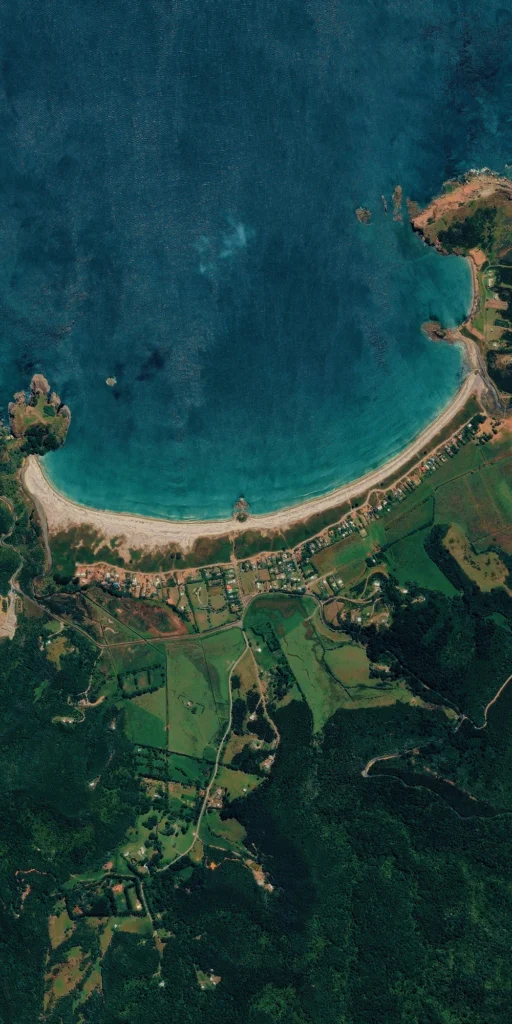
We feed our technology with satellite images from open missions (Copernicus) or the latest, very high-resolution commercial data.

We select information sources based on objectives, needs, and data update requirements in order to optimize the necessary resources.

Analysis through artificial intelligence

We process data collected from satellite images and other geospatial information sources. We apply artificial intelligence to analyze all variables of the territory.

The application of cutting-edge technology provides us with information for developing predictive models to mitigate imbalances in the territory and provide measures that increase resilience.

Analytical tools

Agforest seeks to empower its customers to make improving livability a collaborative effort. We develop our own software for processing information.

This system includes proprietary tools for data correlation and insight extraction. Proprietary technology that allows for maximum customization.

Interactive geospatial visualization

Everything that happens, happens somewhere. We are usually skeptical: if we don’t see it, we don’t believe it. We integrate Agforest’s developments into a platform designed by our team specifically for the geographical representation of data.

Any questions? We have the answers

What type of satellite images are used?

We use a combination of data sources for each need. For continuous monitoring, we rely on constellations such as Sentinel (10m/pixel). For maximum precision analysis, such as canopy segmentation, we work with very high resolution (VHR) images of up to 30 cm per pixel. These images include up to 8 spectral bands, allowing us to analyze in detail the photosynthetic activity and actual health status of the vegetation.

A healthy tree and one suffering from water stress or pest infestation reflect sunlight differently, especially in bands of the spectrum that are invisible to the human eye (such as near infrared). Our algorithms are trained to detect these subtle variations in the “spectral signature” of vegetation, allowing us to identify problems long before they are apparent to the naked eye.

It is not essential, but it is recommended. One of our main services is the automated creation or updating of inventories. If you have baseline data, the results will be more accurate and will allow you to understand the evolution of the trees.

No, it empowers them. Our platform is a decision support tool. We don’t replace the expertise of pruners and gardeners, but rather provide them with a smart roadmap so they can direct their efforts where they are most needed, optimizing their time and increasing the effectiveness of their work.