Vertical Urban Agriculture
Cities continue to grow at an unstoppable pace and, with them, the need for ingenious solutions to produce food without relying on huge tracts of land. Vertical urban farming is not just a passing fad, but a sustainable and practical alternative that allows you to take advantage of every available square meter, while also reducing environmental impact. In this article, we will explore what exactly vertical farming means, what advantages it has, how technology is revolutionizing it and what role it plays in our society.
What is vertical farming?
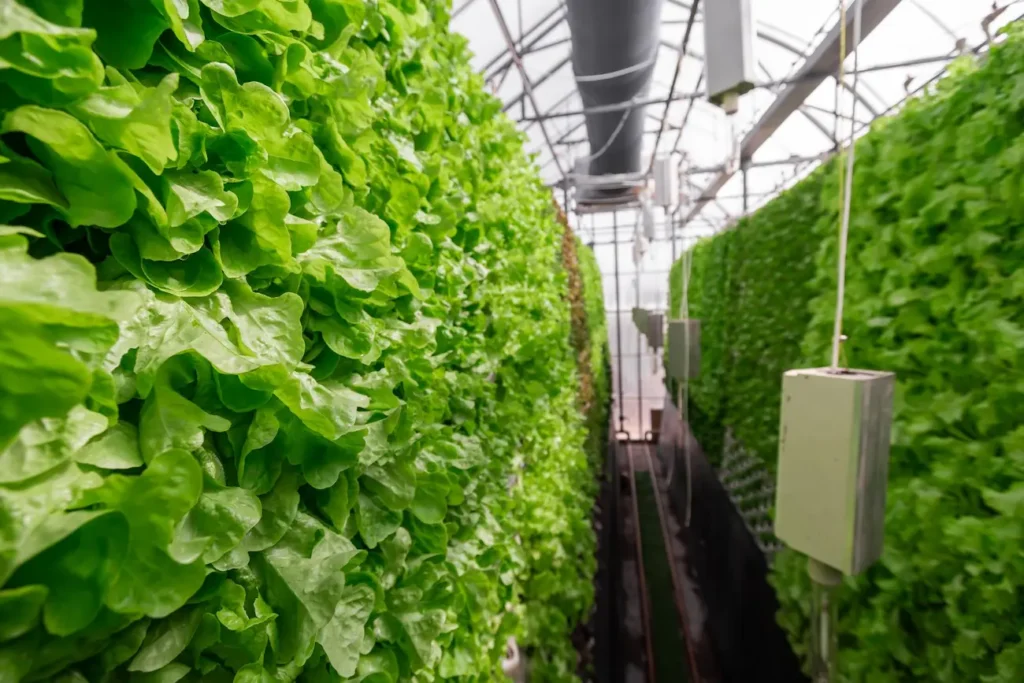
If you’ve ever imagined a skyscraper filled with plants instead of offices, you’re pretty close to vertical farming. It’s an agricultural system that organizes crops in stacked, shelf-like structures, maximizing the space available in urban environments. Forget about the open field and tractors, here the key is hydroponics, aeroponics and aquaponics, three techniques that allow you to grow crops without soil and with drastically reduced water consumption.
Some characteristics that make this method stand out:
- Space utilization: It is grown in buildings, containers and even in old warehouses.
- Total control of the environment: Variables such as light, humidity and temperature are managed to ensure optimal growth.
- Fewer pesticides: Being a closed environment, pests do not have as many opportunities to sneak in.
- Production closer to the consumer: Less transportation, lower emissions and fresher food.
Advantages of vertical farming
This agricultural model is not only ingenious, but also has positive environmental, economic and social impacts.
Efficient use of water and other resources
Compared to traditional agriculture, vertical farming reduces water consumption by up to 95%, according to studies by pioneering companies such as AeroFarms. In addition, the need for fertilizers and pesticides also decreases considerably.
Use of urban space
Why let rooftops, basements and industrial buildings go to waste when they can be turned into vertical farms? Every corner of the city can be transformed into a food source.
Food safety
Vertical farming makes it possible to produce food year-round, regardless of the weather. This reduces dependence on imports and guarantees a constant supply of fresh produce.
Less pollutant emissions
By eliminating long transport distances from rural areas, the carbon footprint of the food sector is significantly reduced.
Boosting innovation and job creation
From engineers to AI specialists, this sector opens up new job opportunities in agricultural technology, infrastructure design and crop management.
Technology in urban vertical farming
While the idea of vertical farming is revolutionary in its own right, what really takes it to the next level is technology. Two tools are making the difference: Artificial Intelligence (AI) and Big Data.
Artificial Intelligence (AI) in vertical farming
AI has changed the rules of the game. It is now possible:
- Accurately monitor crops: Sensors and cameras collect real-time data on plant health.
- Predict problems before they occur: Algorithms detect patterns and anticipate diseases or deficiencies.
- Automatically adjust conditions: Systems can modify light, water and nutrients to maximize production and minimize waste.
Big Data in vertical farming
The analysis of large volumes of data makes it possible to optimize agricultural yields:
- Evaluate climatic and environmental changes to adapt crops to different conditions.
- Optimize the use of resources based on historical records.
- Plan harvests accurately to avoid overproduction or shortages.
How does this impact society?
We are not just talking about a technological trend, but about a transformation with palpable effects on our daily lives.
- More access to fresh food: Less transport time means fresher products in supermarkets and, in many cases, at more affordable prices.
- A greener future in cities: Vertical farming can be integrated with urban planning to create more sustainable and self-sufficient cities.
- Increased environmental awareness: Many initiatives include educational programs to help people understand the importance of sustainable food production.
- Bridging the food gap: In urban areas with difficult access to fresh produce, vertical farming can be a solution to improve nutrition.
The future of cities
Vertical farming is not just a futuristic idea, it is a real and growing solution to the challenges we face in food production. Backed by technologies such as Artificial Intelligence and Big Datawe are facing a shift that optimizes resource use and improves sustainability. As cities continue to expand, adopting these models will not only be an option, but a necessity to ensure future food security. Are we ready to see skyscrapers converted into urban gardens? There is every indication that we are.