Waste management by public administrations: challenges and technological solutions.
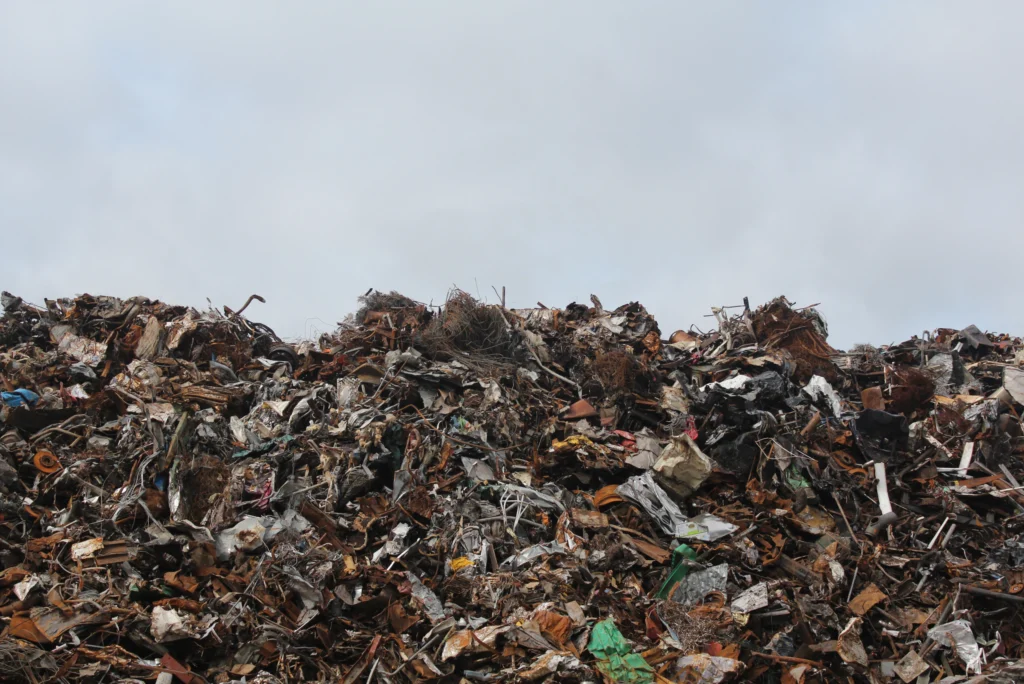
Every year, more than 2 billion tons of municipal solid waste (MSW) are generated worldwide. This figure, far from stabilizing, is growing as consumption and urbanization increase. MSW includes the waste generated by households, small businesses and municipal services – that is, the waste most directly linked to the day-to-day running of our cities.
However, a significant portion of this waste is not adequately treated. According to data from the United Nations Environment Program (UNEP), MSW already generates more than 800 million metric tons of CO₂e annually, and forecasts are not encouraging: if no action is taken, by 2050 the amount of unmanaged waste could double, reaching 1.6 billion tons annually.
Institutional and regulatory modernization as a basis for smart solutions
For emerging technologies to truly transform urban waste management, public administrations must act as active facilitators of change. This involves not only acquiring technology, but also adapting internal processes, evaluation criteria and control frameworks.
At Agforest we work, among other projects, with local and regional organizations that must respond to demanding sustainability objectives set by Law 7/2022 and the guidelines of the National Integrated Energy and Climate Plan (PNIEC), among other regional frameworks. Based on this experience, we identified three key areas to enable smarter management:
- Regulatory framework oriented to traceability and digitization. Current regulations promote full traceability of waste. Sensor technologies, AI or blockchain allow not only to comply with these requirements, but also to anticipate inspections or environmental audits through automated information systems.
- Technical capacity to introduce innovation in public contracts. The contracting of collection and treatment services is the operational instrument par excellence. Integrating clauses on efficiency, digitalization and predictive control allows municipalities to demand measurable results, not only frequency of passage or volume transported.
- Data-driven governance and institutional scalability. Effective management requires interoperable systems that allow the integration of municipal, county or regional data. This facilitates multi-layered decision making and the design of more accurate policies, both in urban and rural environments.
These administrative bases are essential to move from reactive management to data-driven management, in real time and with a strategic vision. This is the only way to deploy the full potential of technologies such as artificial intelligence or satellite observation.
Main structural and regulatory challenges
Although current legislative frameworks have advanced in ambition and coverage, the practical implementation of waste management still faces persistent gaps between planning and operational reality.
These barriers not only slow down progress towards a circular economy, but also hinder the adoption of technologies capable of improving the efficiency of the system.
Among the most limiting factors are the following:
- A municipal recycling rate stagnating at 35%, far from the 50% target set by the EU for Member States.
- More than 40% of urban waste is landfilled, with little material or energy recovery.
- Insufficient treatment and separation infrastructure, especially in rural and peri-urban areas.
- Inter-administrative lack of coordination between levels of government and between local, regional and national action plans.
- Low citizen involvement in separation at source and compliance with regulations, aggravated by the lack of personalized information and digital channels for participation.
Addressing these challenges requires not only greater investment, but also analytical tools, dynamic planning and digital monitoring to optimize the institutional response.
The ecological transition will not be solved by political will alone: it requires a data and operational intelligence infrastructure that will allow us to move forward rigorously and effectively.
Artificial intelligence and emerging technologies in the service of institutional sustainability
New digital tools are redefining the paradigm of urban waste management, not only in terms of operational efficiency, but also in their ability to support strategic decision making by public managers.
The incorporation of technologies such as artificial intelligence, IoT or advanced traceability systems is allowing many local entities to move from reactive models to predictive and adaptive schemes.
The most relevant application cases include:
- Algorithmic optimization of routes and collection frequencies, based on real-time, historical and seasonal data, with direct impact on the reduction of emissions and logistics costs.
- Environmental sensing systems in containers and clean points, capable of detecting filling, overflows or incidents in an automated way, enabling agile and integrated responses with control centers.
- Traceability platforms that ensure documentary integrity and regulatory compliance throughout the entire waste cycle, from collection to recovery or final disposal.
- AI models trained on municipal data to detect generation patterns, identify structural inefficiencies and anticipate investment needs in key infrastructure.
This set of solutions does not operate in isolation: it requires institutional integration, interoperability with existing systems and a strategic vision of sustainability based on data, aligned with the regulatory and climate commitments that public entities must assume in this decade.
Satellite intelligence: global vision, local impact
At Agforest we take digitization one step further by combining the use of satellite technology and artificial intelligence applied to territorial analysis. Our solutions integrate multispectral and hyperspectral data, together with models trained to detect patterns of waste accumulation, uncontrolled dumping or environmental risk hotspots.
Through geospatial analysis techniques, we are able to generate operational intelligence useful for municipal planning, both in dense urban environments and in dispersed rural areas. This allows administrations to anticipate, target resources and measure the impact of their interventions with temporal and spatial precision.
In addition, our tools include features such as automatic reporting, proactive alerts and dynamic maps that can be compared over time, facilitating agile, informed and scalable decision making at different levels of government.
With a single layer of continuous observation, municipalities can monitor their territory more efficiently, improve control of contracted services and move towards evidence-based environmental governance.
Smart environmental governance: from data to decisions
The challenges facing public administrations today in waste management will not be solved by more infrastructure or awareness campaigns alone. What will make the difference will be the ability to integrate territorial intelligence, technological traceability and institutional capacity to anticipate.
At Agforest we believe that sustainability does not start in the container, but in the data. Detecting, planning and acting with precision is not a future aspiration: it is a current possibility thanks to the combination of satellite observation, artificial intelligence and evidence-based governance models.
Schedule a technical session with our team and we will evaluate together the concrete opportunities to optimize your environmental management.