
Carbon capture: advances and challenges of geospatial data
Carbon markets, which emerged as a result of the Kyoto Protocol in 2005, have become a fundamental mechanism for ensuring our survival on the planet. These markets allow individuals, companies and countries to buy carbon credits to offset their greenhouse gas emissions, investing in projects that remove carbon from the atmosphere, such as reforestation, promoting renewable energies or fostering the energy transition.
Today, Europe has the European Emissions Trading System (EU ETS), the world’s largest carbon market. Every year, we generate 32 billion tons of CO2. According to MIT estimates, we would need 200 billion trees to offset these emissions. These figures highlight an alarming reality: there is not enough land to plant that many trees and, moreover, their effect would come too late. Did you know that geospatial data allows a new way of measuring carbon sinks?
How does carbon sequestration work?
Carbon sequestration, also known as “carbon sequestration”, is a set of processes that seek to remove carbon dioxide (CO2) from the atmosphere to mitigate the effects of climate change. These technologies are classified into three main categories according to their final destination:
- Carbon capture and storage (CCS): This technology focuses on capturing CO2 from point sources, such as power plants or industrial processes, for subsequent storage.
- Carbon Capture, Storage and Use (CCUS): This technology goes beyond storage and seeks to use captured CO2 as a raw material for various industrial sectors.
- Bioenergy with carbon capture and storage (BECCS): This technology combines biomass with carbon capture to create a negative emissions power generation process.
Carbon sequestration methods
As with any other technology, there are different methods of carbon sequestration. Although the best known are those that involve “sequestering carbon” directly from the atmosphere, other methods are becoming increasingly popular:
- Pre-combustion capture: applied in industrial installations before CO2 is mixed with flue gases.
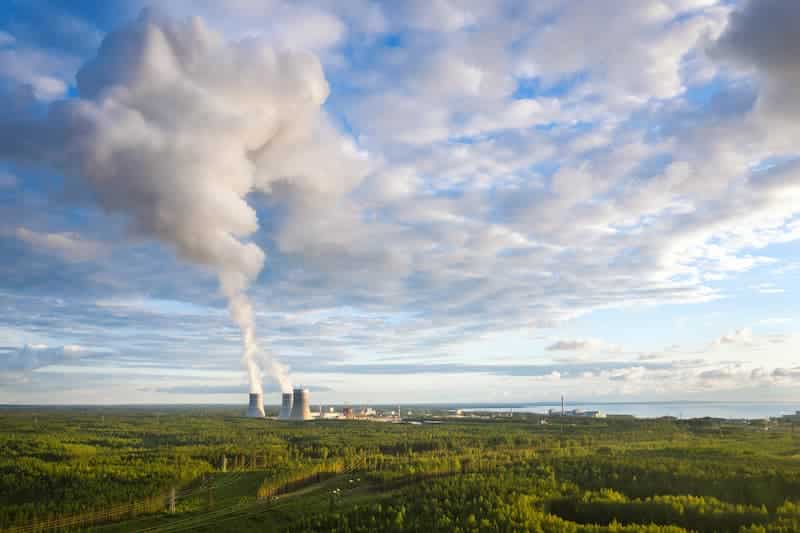
- Post-combustion capture: used in the chimneys of industrial facilities to capture CO2 from flue gases.
- Direct air capture: the most common methodology, which allows CO2 to be captured directly from the atmosphere.
Geospatial data and AI to measure carbon sequestration capacity
The planet’s forests act as green lungs, absorbing around 2.3 billion tons of CO2 per year. This means that each mature tree, approximately 20 years old or older, captures an average of 10 kilos of carbon in twelve months.
While reforestation or tree planting is a valid strategy to offset greenhouse gas emissions from human activity, the scarcity of space to “build” new carbon sinks is prompting us to look for innovative alternatives.
In this context, the analysis of geospatial data together with predictive and analytical models based on artificial intelligence (AI) emerges as a powerful tool to identify new carbon sinks.
Beyond trees, geospatial data have allowed us to discover the carbon absorption capacity of other natural elements, some of them particularly interesting:
- Permeable soil: water droplets from rain, which captures CO2, are absorbed by the soil, which filters its contents and retains this substance. Incredibly, the soil absorbs 25% of emissions.
- Biodiversity: the fauna and flora present in marine and fresh water have great potential for carbon sequestration. This is the case of whales, which, on average, absorb 33 tons of CO2, the equivalent of a thousand trees, according to a study published by the International Monetary Fund (IMF).
Carbon sinks: an emerging market
The Global Compact of the United Nations (UN), establishes the obligation to reduce global greenhouse gas emissions by 43% by 2030 and 60% by 2035 in relation to 2019 levels, reaching carbon neutrality in 2050. These drastic measures are intended to ensure the Earth’s habitability.
The ability of geospatial data to quantify the carbon sequestration of elements beyond trees makes it a great ally for the transition to a circular and regenerative economy. This is due to the alternatives that can be considered, such as, for example, the commercialization of carbon credits by city governments, or the creation of a market around the carbon absorption capacity of agricultural land.
Revenues that companies, governments and institutions could use to improve the sustainability of cities and maintain or create new CO2 sinks to provide a steady source of income. Undoubtedly, geospatial data and artificial intelligence (AI) will lead to a paradigm shift in relation to climate change mitigation in the coming years.